
Sunday Food Memories
- for our moms
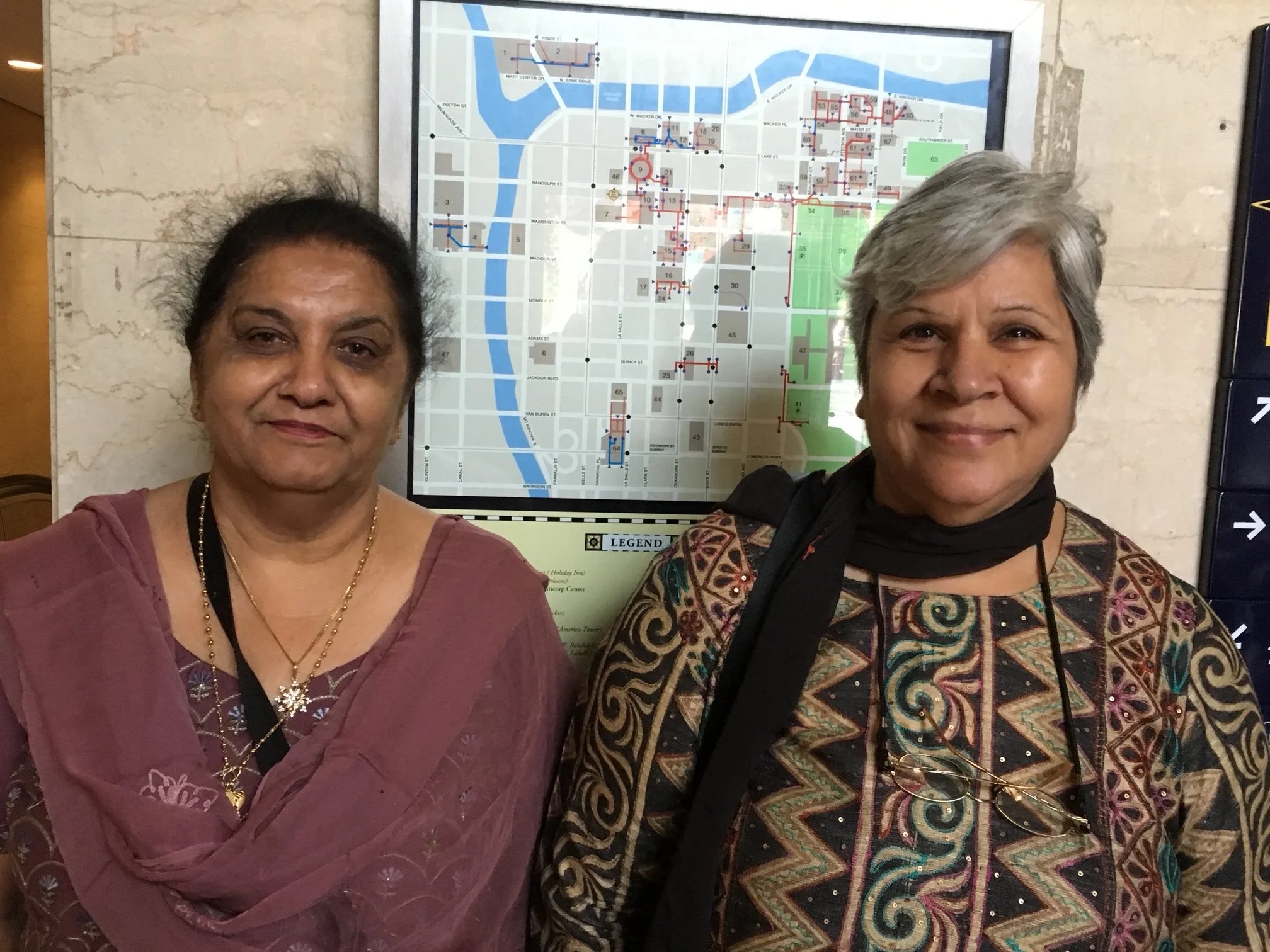
This blog captures our Sunday food memories and honors our moms, Harmohan and Madhulika. Thank you, for all you do for us and for raising unapologetic foodies. - Jeet and Reema
Sunday Food Memories - for our moms
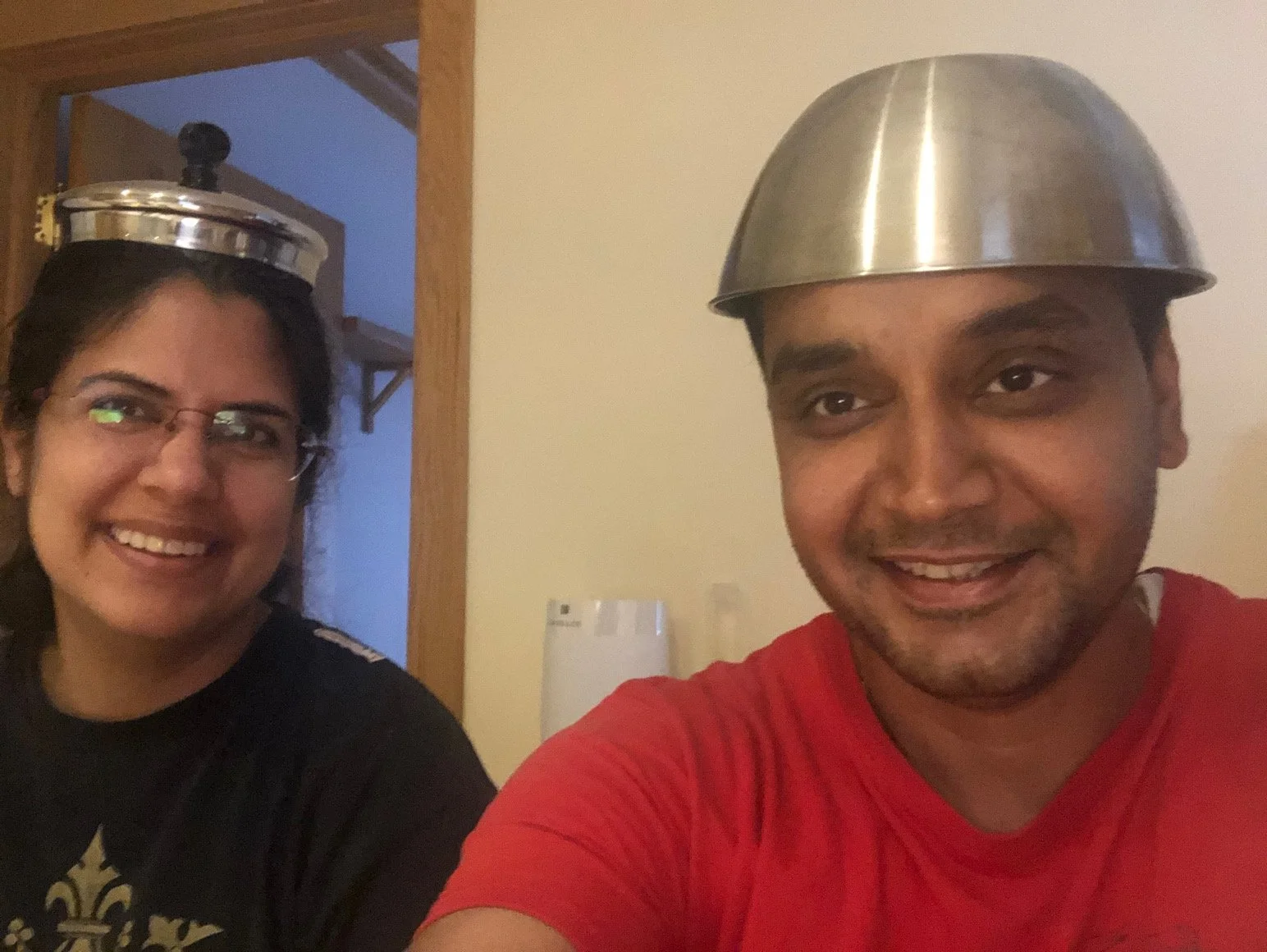
This blog captures our Sunday food memories and honors our moms, Harmohan and Madhulika. Thank you, for all you did for us and for raising unapologetic foodies.
-Jeet and Reema
We both grew up in lower to middle class families in bustling, vibrant neighborhoods in Delhi. Our working moms were always dashing about trying to juggle household chores with their full-time jobs. We don’t know how or when they managed to shop for groceries, do meal prep, and cook fresh meals.
Weekday meals were good but our moms’ skill, imagination and pride shined on weekends. Sunday meals were special, a time for delicacies and family favorites, when our moms could also relax and join us at the table. Occasionally, mom would put away her rolling pin, switch off the tava. On these occasions, mostly on Sundays, we would get to order in from one of the many street-side stalls and restaurants dotting the city or get dressed up and go out for lunch or dinner.
This blog captures our Sunday food memories and honors our moms, Harmohan and Madhulika. Thank you, for all you do for us and for raising unapologetic foodies. - Jeet and Reema
Window Shopping
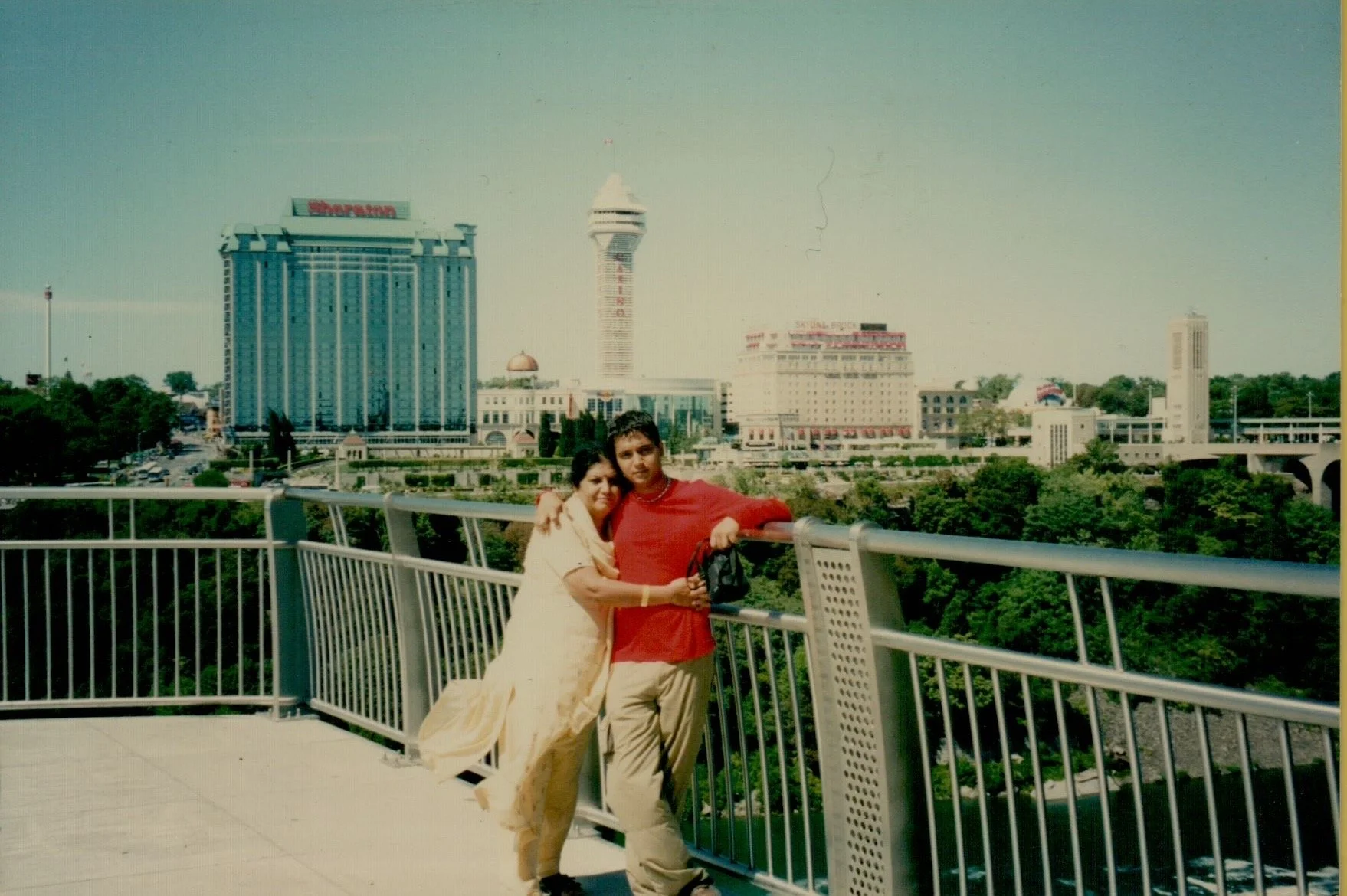
Window Shopping (Image: Mom and Jeet, Boston.)
I didn’t pay a lot of attention during high school. So when I started college, I needed to catch up and get ahead. I doubled up my undergraduate schoolwork with a chartered accountancy course. Coursework and my class schedule consumed all waking hours, Monday to Saturday. Sunday was the only day off.
Mom always loved window shopping. She loved perusing, comparing, parsing; an actual purchase was an occasional afterthought. She had two boys so sometimes when she was missing out on having a companion for (window) shopping sprees, I would accompany her.
We drove the short distance from Sarita Vihar to Lajpat Nagar market and always parked in our regular parking spot. If it was April or May, and falsas were in season, we would beeline to the falsa and jamun street vendor. I LOVE falsas, always have done. We would each have our newspaper cone filled with tart falsa berries tossed with black salt. We snacked on falsas as we walked our regular route through Lajpat Nagar, meandering through stall after stall.
Regular stops included a fabric store, where one could pick out fabric and then get clothes, shawls or dupattas, stitched or hemmed from your local tailor. Another frequent haunt was a men’s clothing store, where I would browse through pants, button-down shirts, or kurtas. We seldom purchased anything of significant value, maybe a dupatta or small clothing item; regardless we spent hours strolling through the market. In between window shopping, we would stop and eat gol gappe and papdi chaat. The window shopping outing always ended with a ram laddu snack (lentil fritters, radish and green chili slaw, tamarind chutney). [Jeet]
Continental Breakfasts
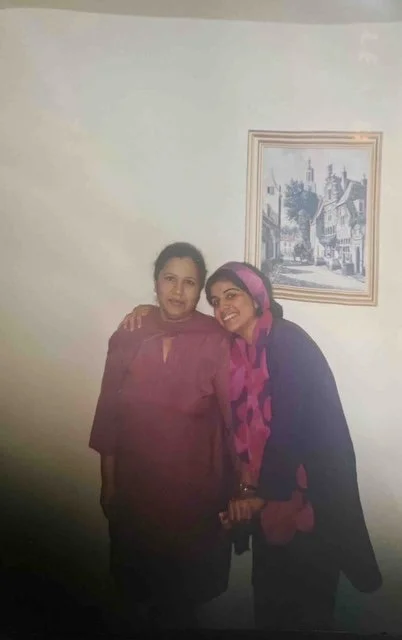
Continental Breakfasts (Image: Mom and Seema, Villa Park, Illinois.)
I inherited my love of food from my mom.
Growing up in a lower-middle class, single-parent household, money was tight. Mom is a foodie but we rarely went out to restaurants. Instead, she found ways to infuse a specialness and wonder into simple, daily meals.
Occasionally, mom would announce that Sunday would feature a “continental breakfast.” Continental breakfast meant veggie omelets, toast, and home-made fries. Sometimes, late afternoon “tea-time” would be accompanied by butter and cucumber or butter and boiled egg finger sandwiches, with the crusts cut out. Whereas most of our meals were eaten sitting cross-legged, in a huddle, on the king-size bed, continental breakfasts and afternoon tea sandwiches were served formally on the dining table. [Reema]

Kanjake, Girl Power!
Kanjake, Girl Power! (Image: The Musketeers, Bell Isle, Detroit.)
Children should be seen and not heard. I never knew or believed in this concept. As a young girl, my single, working mom (read: perpetually exhausted) never muffled my opinion. Even when she told my sister and me to sit quietly while she took a short cat nap in the evening after walking home from her job and before dinner prep, we knew the talking ban was temporary.
One occasion that centered, even exalted girls, was a festival called Kanjak or Kanjake. Wikipedia tells me it is a Hindu ritual where young girls are worshipped as incarnations of the Goddess Durga. I didn’t know the religious meaning of the day. For me, Kanjake meant a special day full of celebration and food.
The day would start with me and my sister taking our bucket baths early. Then, we would wear our fancy clothes, our mom would neatly braid our hair, and we would wait patiently for her to put finishing touches on the special meal. Mom would have been up very early making kale chane, sweet suji halwa roasted in desi ghee, and deep-fried pooris. Kale chane are smaller and darker than regular chickpeas and the traditional festival preparation involved boiling the chana, letting them simmer until the water evaporates, and then dry-roasting the softened chanas with spices. A thick scoop of the spicy chana and smaller spoonful of sweet halwa glistening with melted ghee would be nestled into small, round, freshly-fried pooris. Shining on top of each chana, halwa, poori parcel was a silver rupee coin.
By late morning, the young girls from neighboring homes would start arriving at our apartment door. They would remove their slippers or shoes at the door, and we all sat cross-legged, single file, on the freshly-mopped cool cement floor. We would wait excitedly for our “offering.” Mom would walk down the line tying a red string on our left wrists and handing out the edible parcels, topped with coins. As the hosts, my sister and I would sit at the end of the line and had to wait the longest to get our chana/halwa/poori parcel and pocket our coin.
We devoured the sweet, salty, fatty festival food in minutes, probably seconds. Maybe there were other parts of the ritual - did my mom chant a prayer or light incense? I don’t really remember. My focus waned after the pooja food was served and consumed. I was already thinking ahead to the other homes we’d be visiting next. Our procession of girls would go door to door throughout the afternoon, where all the moms had prepared similar food parcels. We ate our way down our residential street, pocketing our growing heap of coins. [Reema]
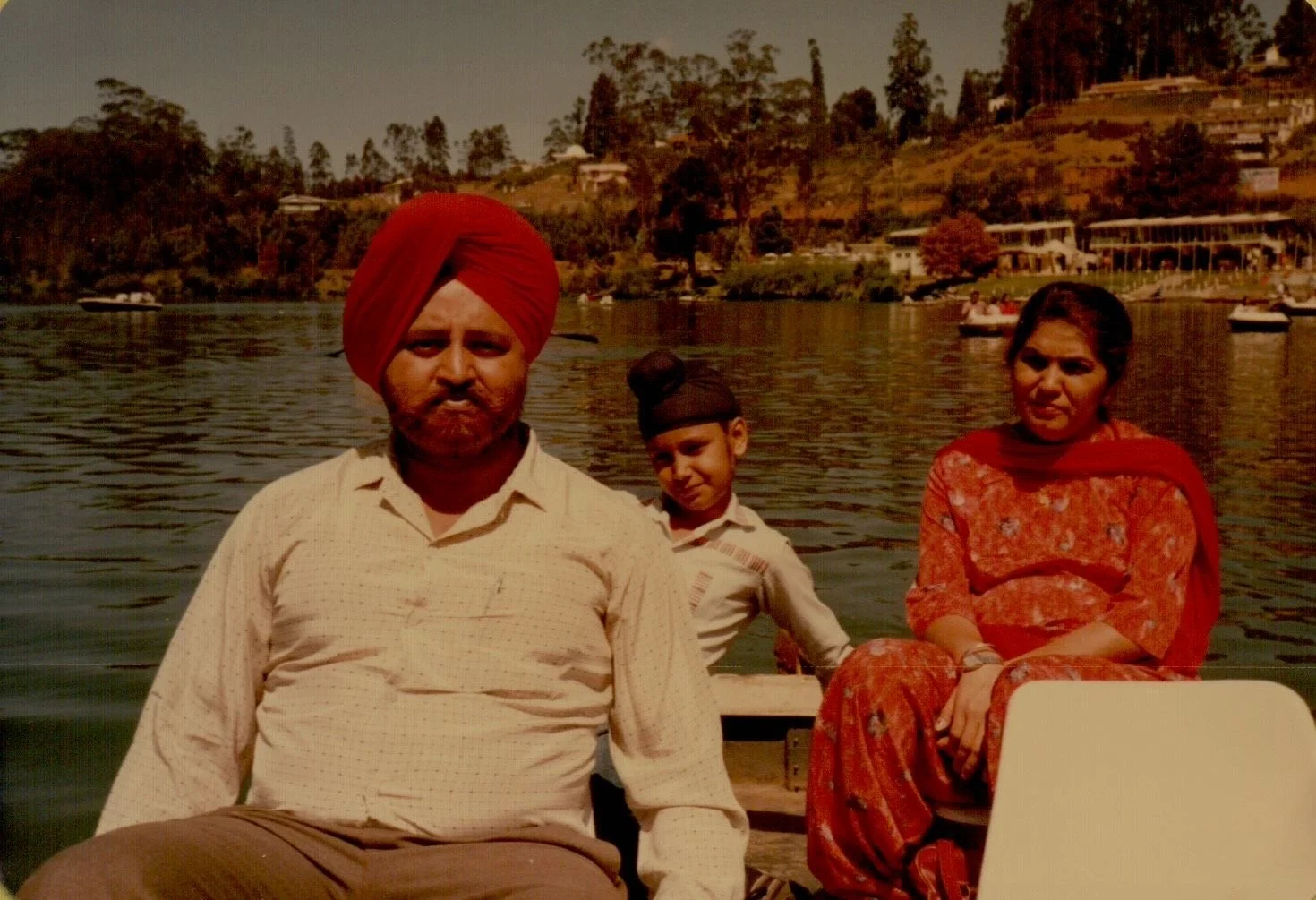
Laudi Majra, Punjab
Laudi Majra, Punjab (Image: Mom, Dad and Jeet, India.)
I grew up a city kid. I had never visited a small village until I was 8 years old. My grandmother was from a tiny village so when my parents told me we were taking a trip to attend a wedding, I was very excited. I had never met my relatives or cousins from that part of India.
In the 1980s, the 8-hour drive from Delhi to Laudi Majra was bumpy and grueling. Our route did not go through any major highways; just lots of residential areas and towns. As we drove through narrow residential streets, I peeked into houses to see how people lived their lives.
As we got closer to the village, my grandmother got more chatty. She started pointing out all the major landmarks she remembered from her childhood. She talked about people she knew from the village and how they might be doing, mixed in with her memories of the landmarks we were passing.
We reached the village early in the afternoon. As we got out of the car, I immediately began waiting for my dad to arrive (he was driving up solo later in the evening). As I sat outside my grandmother's house, I could see singular cars approaching from miles away. Every time I spotted headlights, I would excitedly track the car as it wound through the roads. After following a car for 20-30 minutes, it finally would get close enough for me to realize that it was someone else. I watched cars for a good part of the evening until he finally showed up.
After dinner, when we were getting ready for bed, I had to use the restroom. It was detached from the main house so one had to walk outside to get to it. When I stepped out of the house, it was night. Although there were no street or outdoor lights, to my amazement, I could still see everything under the light of the moon and the stars. I was so busy staring up at the night sky, I almost ran head-first into a grazing water buffalo. I remember thinking, this is so great I could study out in the open if I wanted to. (That never happened!)
The next morning, my father took me to visit his extended grandparents (they must have been in their 90s at the time). As was customary, as soon as we arrived at their home, they offered tea. And as was customary, we accepted. When the tea started boiling, grandmother went to their yard with a tumbler, milked their water buffalo, and finished the tea with the fresh milk. My jaw fell; my 7-year old mind exploded. I have no idea what was being discussed over tea. All I could think about and watch was the water buffalo, mooing and swishing her tail out in the yard. [Jeet]
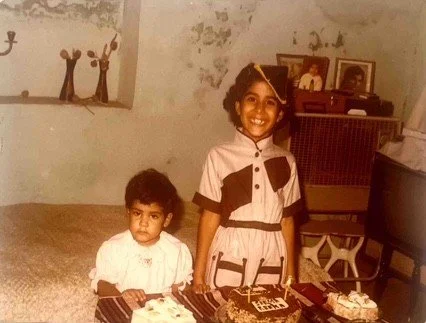
Birthday
Birthday Celebration! (Image: Seema and Reema, Delhi.)
My sister, Seema, is 5 years older than me. Our birthdays are in October. She was born in early October, a libra. I was born in late October, a scorpio.
When I was little, she was didi. I stopped calling her didi when I grew taller than her, though I later regretted that. Seema didi took care of me during the daytime while my mom was at her job. It was Seema’s job to make sure I ate my meals, read to me, entertain me when I got bored and console me when I was missing mom.
I was like an appendage to Seema didi - I went wherever she went. When she was a pre-teen and I was 5 or 6 years old, she was most often my babysitter. We were literally joined at the hip, or I was joined to her hip, in every respect. Even our names were identical, just one letter off.
One occasion where I wanted to extricate myself from didi was my birthday. I was pretty territorial about birthdays. I wanted a separate birthday party, individual birthday cake, distinct birthday presents. I simply didn’t want to share the attention with anyone, even didi.
Unfortunately, my five-year old logic fell on deaf ears. Mom was pragmatic and trying to stretch her modest income as far as possible. She decided that rather than having two birthday parties, and associated expenditures, in the same month, we’d combine both birthday celebrations. And, because she did not want to favor one or the other, she decided that our combined celebration would land in the middle of the month.
I’m sure I was disappointed. Looking back at the birthday pictures, I’m also sure my disappointment was eventually overshadowed by my interest in the goodies. The spread from Wenger’s in Connaught Place - birthday cake (for “Seema and Reema”), pineapple pastries and other sweet confections - was just the enticement I needed to quell my objections. [Reema]
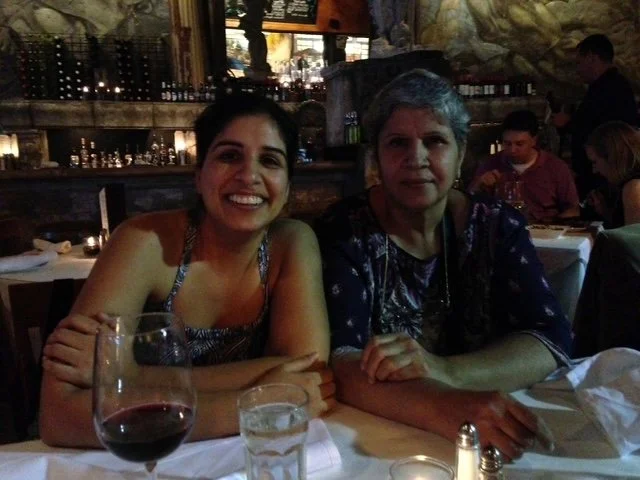
Wedding Feasts
Wedding Feasts (Image: Mom and Seema, Miami Beach.)
In our market neighborhood of Paharganj, Delhi, most people lived in 2-3 storey or taller apartment buildings. Space was tight; most households included extended family members, sometimes living in simple one or two bedroom apartments. Backyards or verandas were rare so ours and our neighbors’ lives spilled out onto the street.
Kids set up makeshift cricket wickets in our residential street, which were hastily taken apart and put back together each time a car needed to pass. Grandmas sat on straw cots set out on the street in front of their buildings, sunning themselves in the winter or enjoying the cool, evening breeze in the summer. Occasionally, a portion of the street would be blocked off for a neighbor’s wedding. Even though the evening wedding ceremonies were hidden from view under tents, I loved these occasions because the meal prep happened out in the open, right on the street.
For a late evening wedding or dinner reception, meal prep started early in the morning. Cooks would set up giant cauldrons or deep woks heated by make-shift wood-burning stoves on the pavement. Bags on bags of produce - onions, potatoes, cauliflower, cabbage, okra, peppers, and more - would be peeled, chopped, diced, sliced, at seemingly lightening speed, and set aside for various dry or saucy preparations. Chicken and lamb would be cut and dropped in fragrant oil at a rolling boil followed with the tadka of onions, green chilies, ginger, garlic, spices, followed by chopped tomatoes, and finished with cilantro garnish.
Hanging over the balcony wall, me and my cat watched greedily, marveled at the abundance, and salivated, as the aromas wafted down the street and up to us. [Reema]
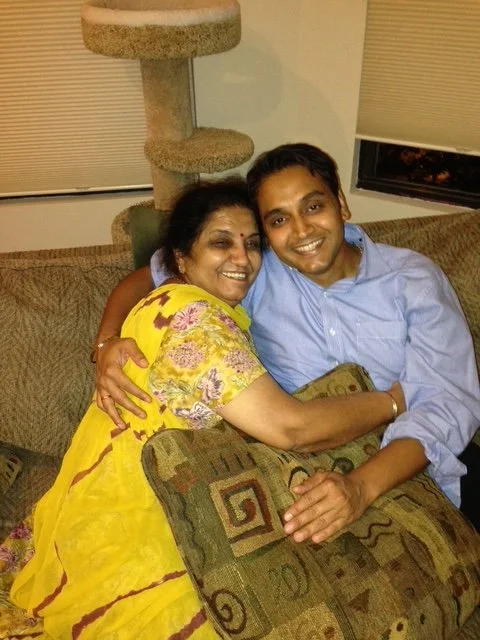
Gajar ka Halwa
Gajar ka Halwa (Image: Mom and Jeet, Chicago.)
I moved away from home and to the US when I was 22. As a cash-strapped university student, it was hard to maintain a connection with home. In the pre-social media era, way before zoom or FaceTime was a thing, phone calls were my only connection. But calling cards were exorbitant ($5 a minute). Calls were short, to the point:
Reached US, am eating ok, working hard at college.
Everything is good here in Delhi.
Ok, bye.
Bye.
Voicemails from parents were also short, awkward: “This message is for Kanwal Jit Singh. This is your parents from Delhi.” As if I had a second set of parents in another city.
My first trip back was 3 years after emigrating. It was the longest time I had ever been away from home up to that point.
My mom was thrilled to have me back for a visit. In the morning, as soon as she would hear me stirring in bed, realizing I was about to wake up, she would be at my bedside with a steaming hot bowl of gajar ka halwa and a cup of masala chai. She knew I liked raisins in my halwa, so there was always a good serving of those.
Carrot halwa takes hours to prep and cook, start to finish. The carrots are hand-grated, stewed for hours in milk, sugar and nuts. Once the heat is reduced, the carrot mixture is cooked yet longer. All the while, you constantly stir the halwa so it doesn’t stick to the bottom of the large, heavy kadhai. [Jeet]
Malai Sandwiches
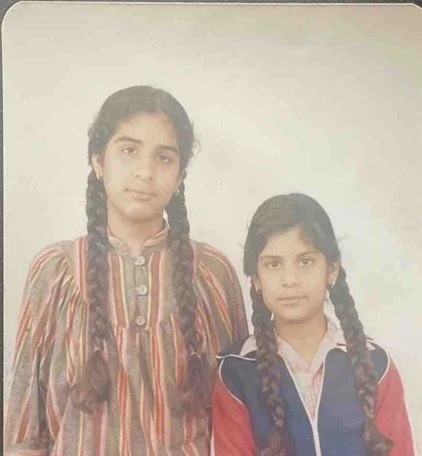
Malai Sandwiches (Image: Reema and Seema, Delhi.)
Growing up, we would frequently visit with or, periodically, move in with my cousins, aunt and uncle. During Summer school holidays, all four cousins would spend the morning playing made-up games. We were soldiers at war with stick guns, we were shopkeepers, meticulously counting our stacks of money (hand-cut pieces of paper with the currency written on them, bound by tiny rubber bands), and we were doctors attending to make-believe patients.
By mid-morning, we would have already been playing for a few hours outside in the blazing sun. We would take a short break for my aunt’s specialty snack: malai sandwiches. Historically, Indian households would get whole cow or buffalo milk directly from farms or dairies. The milk was raw, unpasteurized, so people would regularly boil the milk before consuming it. More recently, pasteurized milk comes in packets from dairy cooperatives but old habits die hard and people continue to boil milk.
Malai is the cream that separates and floats to the top as milk simmers. My aunt would carefully scoop up and cool the malai, thick and creamy, and spread it over a soft piece of white bread. She would generously sprinkle sugar over the open-faced sandwich. We each got a malai and sugar sandwich before we rushed off to continue our games. The cooling and nourishing snack was just the right fuel to keep us going until lunchtime. [Reema]
Sitaram ke Chole Bhature
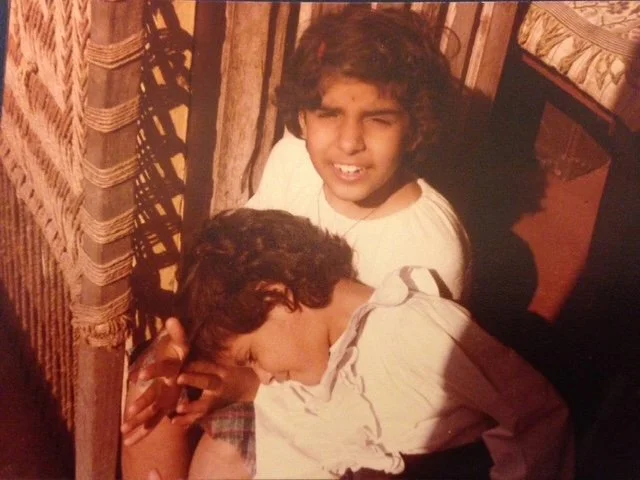
Sitaram ke Chole Bhature (Image: Reema and Seema, Delhi.)
If you grew up in or around Delhi, chances are you have eaten at or heard about Sitaram’s Chole Bhature. In the 80s and early 90s, when we were growing up, there was no competition. When I went back to Delhi as an adult, I learned from family and neighbors that worthy challengers had sprouted up in the newer Delhi suburbs. Some family members even claimed that the challengers were better, which is blasphemous as far as I am concerned.
In our home, chole bhature were a Sunday lunch tradition. Mom would ask my sister and me to walk down to Sitaram’s stall and pick up 3 orders of chole bhature. It was a short walk from our apartment on Wazir Singh street to Sitaram’s. The menu for Sitaram’s was short and to the point: he sold chole bhature. That’s it. Most days he would sell out by early afternoon and close up shop. If you didn’t place and pick up your orders by early afternoon, you were bound to leave empty-handed.
As you approached the stall, you would see a giant wok set on a burner on the sidewalk keeping the chole warm. Another giant wok contained the frying oil for the bhature. Most days, there would be a group of people waiting for their to-go orders.
The bhatura: puffy, pillowy, fried bread lined with a fine mince of paneer, dotted with green cilantro bits. Each order came with two, large bhaturas.
The chole: the chole, soft but not mushy, were served in an eco-bowl (long before that was a thing) made of dried leaves. The vendor would pour signature masala water on top and you could choose whether you wanted the chole with or without potato. With potato was the way to go because the soft, starchy, potato had absorbed all of the goodness of the chole spices during the cooking process.
The fixins: Each order included a side of carrot and green chili pickle. [Reema]
Reema: I dream of that carrot pickle to this day. Crunchy, spicy, tangy, deceptively simple taste but close to impossible to replicate.
Jeet: Last bites have always been important to me. Sometimes you got extra chole, sometimes the vendor was too busy to entertain your request. I would set aside a bit of bhatura with chole, a piece of pickle, a tab of chili as I finished the rest of the food. Then came the last bite, with each component, to finish it right.
Wimpy’s Restaurant
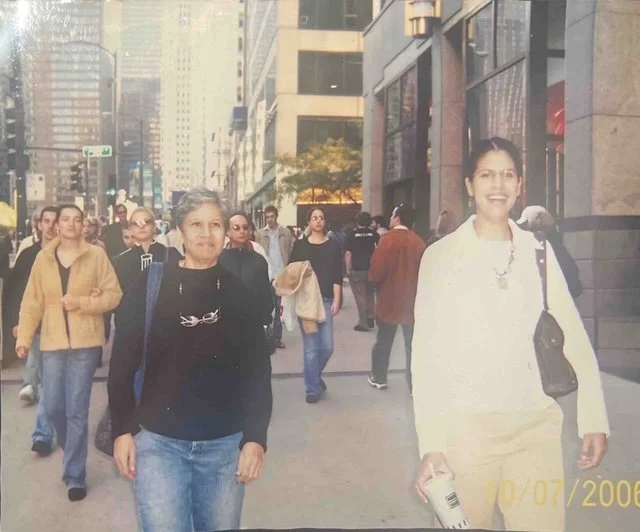
Wimpy’s Restaurant (Image: Mom and Reema, Michigan Avenue, Chicago.)
When we were craving a burger, fries, and coke, we headed to Wimpy’s burger in Connaught Place. The chain, which originated in the US, spread to India and eventually Delhi. The Lamb burger, fries and drink were served on iconic red trays. Wimpy’s eventually gave way to McDonalds in Delhi, but when we were kids, burgers and Wimpy’s were synonymous.
On one memorable visit, my mom, sister and I were seated on a table for four in the cafeteria-style dining room. I was busily chewing my ketchup-soaked fries so I did not immediately notice the tall, solo diner scanning the room looking for an available table. The dining room was packed and noisy, families and packs of friends chattering away. The diner eventually walked up to our table and politely asked if he could join us. My mom, motioning the empty, fourth chair, was happy to oblige.
I don’t remember the conversation. I was probably too young and too engrossed in my meal to follow along. What I do remember noticing - with half alarm and mounting embarrassment - is that my usually reserved mom suddenly became smiley and giggly. What is going on? I thought, as I regarded the older man at our table with new interest.
He was tall and sat elegantly with his lanky legs tucked under the cafeteria table. His clothes - tshirt and jeans - were as understated as his demeanor. His salt and pepper hair was cut short. He had a pleasant smile and he was handsome. Mostly, he seemed to be making polite small talk, which seemed to enthrall my mom.
Eventually, the man finished his meal and politely said his goodbye to us. I don’t know if my mom or sister told me while he was seated at our table or later. Eventually I learned that our guest was none other than the famed Indian actor and former champion wrestler, Dara Singh. As an adult, I remember my mom’s excitement and star struck reaction with a chuckle. [Reema]
Demand and Supply
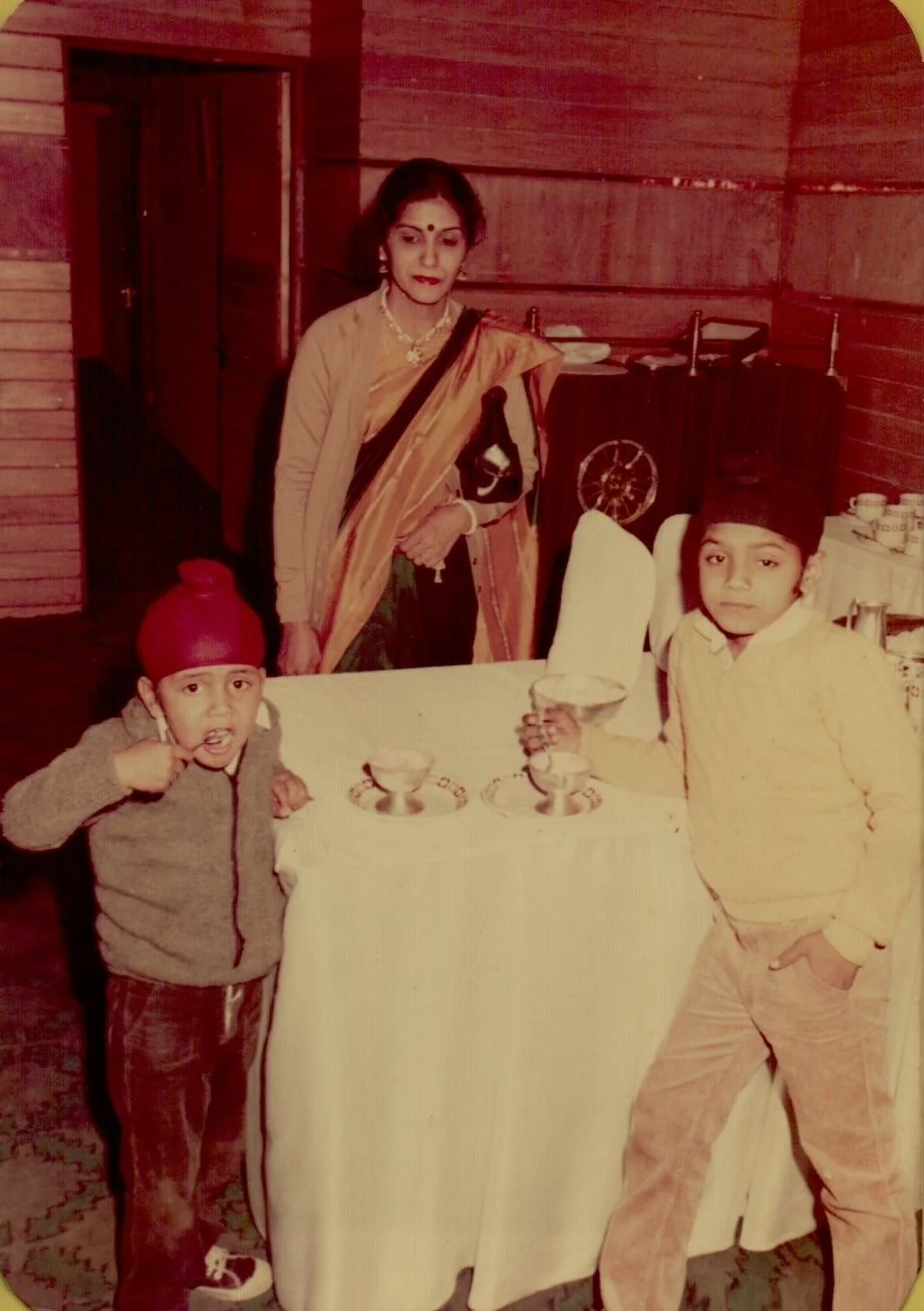
Demand and Supply (Image: Mom, Jeet and Vikram, Delhi.)
Growing up, a non-negotiable demand of mine was that every meal had to be with yogurt. It didn’t matter what my parents, various aunts, grandma put in front of me, I had to have yogurt on the side. Otherwise, I wasn’t a fussy eater: so long as yogurt was next to my plate, I was happy to eat almost anything.
My yogurt demand was so predictable, there were days when my mom or grandmother (who lived with us and helped raise us during our school years) would go door to door to our neighbors with an empty saucer to ask the neighbors for some if it ran out at home.
When we were invited over to friends or families’ houses for dinner, expectation was that yogurt be included in the menu. Sometimes, just to tease me, my parents would serve lunch or dinner at home joking that they didn’t have yogurt. I would promptly go back to my room, saying “I’m not going to eat.” Hearing laughter from the dining room, I knew a prank was being played on me. Hungry and curious, I would head back out to the fridge to confirm that yogurt was waiting for me.
As I grew older, my demand softened. If yogurt is available, I eat generous helpings. If it isn’t available, that is fine too. Thing is, most of my family, in laws, and close friends know about my love. So, a bowl of yogurt is usually waiting on the dinner table or chilling in the fridge. [Jeet]
Sugarcane Farms
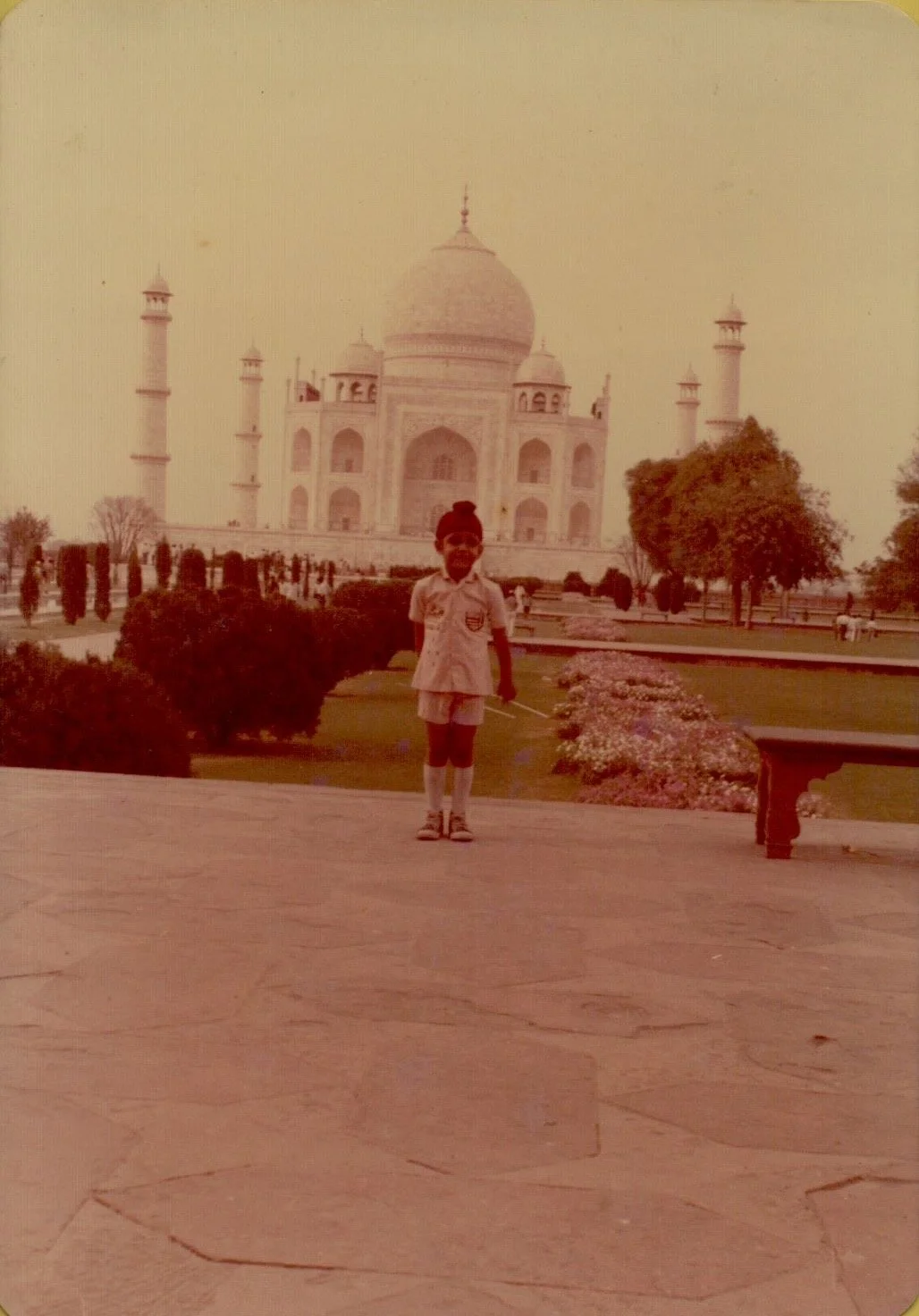
Sugarcane Farms (Image: Jeet, Agra.)
While I was visiting my grandmother’s village as a child, I overheard my grandmother talking about the sugarcane farm by the river and how beautiful it was first thing in the morning. I was never one to wake up early. But one of the following mornings, I woke up at 5, no alarm. I shook awake one of my cousins, and we both started walking toward the general direction of where we thought the river was located. (We told my grandmother we were going for a walk within the village limits so she would allow us to go alone.)
It was a cold, brisk morning. The path ran through farms. We could feel the dew on our feet as we walked in our flip-flops. Finally, we spotted the river. The sun had been up for an hour or less so the dew was still shining among the blades of grass over the entire field leading to the river bank. The Sutlej river looked beautiful, the sunlight shining on the water making it look like a treasure chest of jewels. We sat on the bank for a bit until we got cold.
As we headed back to grandmother’s house, our hands and feet warmed up from the exertion. We passed sugarcane fields, with young, fresh stalks. We both remembered the bollywood movie sequences where the hero or heroine breaks off a fresh stalk of sugarcane and tears through the skin. Impromptu, we decided to reenact the sequence. As we walked up and broke two sugarcane stalks, we heard a loud voice yelling at us and we quickly scampered off.
The rest of the way home, we bit into the soft flesh of the stolen sugarcane stalks, the juice running down our mouths, chin, clothes and hands. By the time we arrived home, we were drenched in sticky juice, our bellies full. [Jeet]